
The Call You Will Never Get
If you grew up in a Nigerian home, you already know this: your mother will not call you from Ibadan, Enugu, or Owerri to say the food is finished. She will manage. She will stretch the last cup of rice into something. She will tell you everything is fine when you ask, because she does not want to worry you, and because asking feels like complaining, and Nigerian parents do not complain to their children who are "doing well abroad."
This is not a character flaw. It is love turned inward. But it means that by the time you find out the cupboard is actually bare, things have already been difficult for a while.
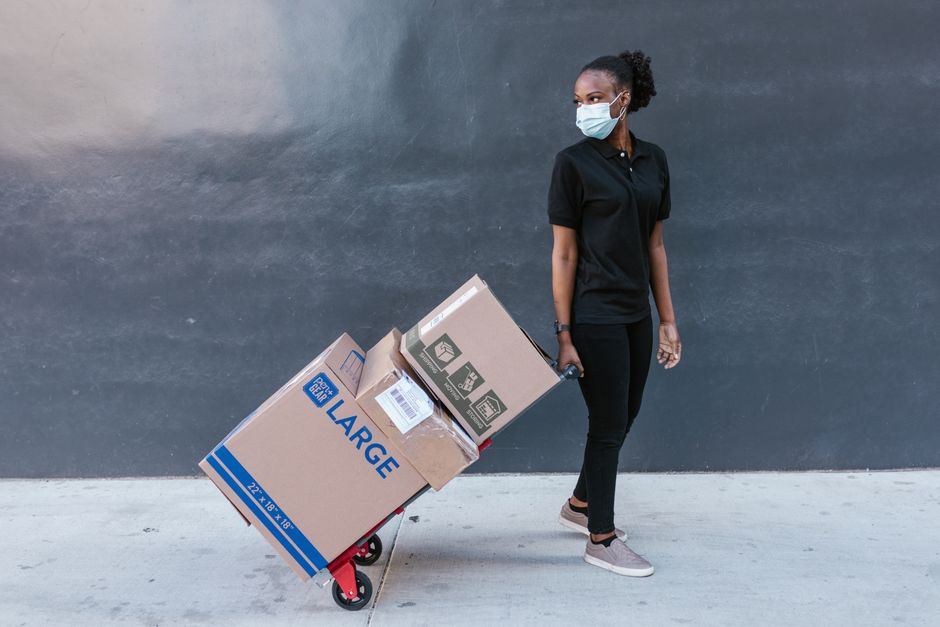
The good news is you do not have to wait for that call. There are softer signals, and there is a way to make sure the food arrives before anyone has to say a word. If you want to buy food for family in Nigeria online from the UK, without sending cash that gets absorbed by something else, this is exactly what Pantry was built for.
The Signals Your Parents Send Without Saying It
You will not always get a direct message. But if you pay attention to how they speak, the signals are there. Watch for these:
- The subject changes fast. You ask what they ate for dinner and they pivot to asking about your work, your health, the weather in the UK. A parent who is eating well will usually answer the food question easily. One who is not will move past it.
- The ingredients disappear from the conversation. A few months ago your mum mentioned she made egusi soup. Then ofe onugbu. Then it was just rice. Then she stopped mentioning food at all. Staples shrink before meals do.
- They start mentioning prices unprompted. "Everything is expensive here now." "The market is not friendly." They are not asking you for anything. They are just letting something slip.
- They decline your video call offer or keep it short. A kitchen that looks sparse in the background is something a parent will protect you from seeing. Short calls from people who usually love to talk are worth noticing.
- A younger sibling or a neighbour mentions it in passing. Not accusing anyone, just a quiet "Mummy has not been cooking much lately" or "Uncle said things are tight." This is your clearest signal and the one that usually comes last.
- You sent money two months ago and there has been no mention of shopping since. Life competed with that money. A school bill, a medical appointment, a relative's urgent need. The money was real. The food just did not happen.
Why Asking Directly Does Not Always Work
You might think the solution is simply to ask. "Mum, do you have food at home?" But anyone who has tried this knows how it goes. You get reassurance. You get "we are managing." You get a change of subject delivered with warmth and a Bible verse.
It is not dishonesty. It is the same instinct that made her tell you not to worry when you were sitting your A-levels, even when things at home were genuinely hard. She carried it so you could focus. That does not stop just because you are now the one earning.
This is why waiting for confirmation does not work as a strategy. The confirmation rarely comes until after the difficult stretch has already passed.
Buy Food for Family in Nigeria Online, Without the Guessing
The alternative is to make the question unnecessary. If a recurring basket of staples, rice, garri, palm oil, beans, semolina, tomatoes, arrives at your parents' door in Nigeria every month, there is no cupboard to go bare. Nobody has to ask, nobody has to admit anything, nobody has to feel like a burden.
That is what Pantry's Family Basket does. You choose the items from the NG Store, pay in pounds from the UK, and FoodBank.ng's own staff buy and deliver the food directly to your family's address in Nigeria. No cash transfer. No asking a relative to shop on your behalf. No wondering whether the money made it to the market this month.
The food arrives as food. A nursing mother at home with young children while her husband works shifts in a Birmingham hospital does not have to coordinate anything. An elderly father in Port Harcourt who will not pick up the phone to say he is struggling does not have to say a word. The basket comes.
It is not about distrust. Sending money is love too, and the people who receive it are doing their best with competing needs. This is just a more direct shape of the same care. The food lands in the kitchen instead of being rerouted by life.
Set It Up Once, Then Stop Worrying
The practical steps are simpler than you might expect. You do not need to be online every month managing a transfer. You set up the basket, confirm the delivery address in Nigeria, and Pantry handles the buying and delivery from there.
If you want to send foodstuff to Nigeria from the UK without the logistical weight of coordinating it yourself each time, this is the quieter version of that. It runs in the background. Your parents eat. You get on with your week in the UK.
The next time your mum says "we are fine," you will know that at least one part of that is true, because you already made it true.
Ready to set it up? Get started with Pantry and build a Family Basket for the people back home. Already have an account? Sign in and check when the next delivery is due. The cupboard should never be empty without you knowing.